
第63回人権理事会 議題2 アフガニスタン人権状況特別報告者とのインタラクティブ・ダイアローグにおける尾池厚之大使ステートメント
令和8年9月8日
The 63rd Session of the Human Rights Council
Item 2: Interactive dialogue with the Special Rapporteur on Afghanistan
Statement by Ambassador OIKE Atsuyuki
The Permanent Mission of Japan in Geneva
7 September 2026
![]()
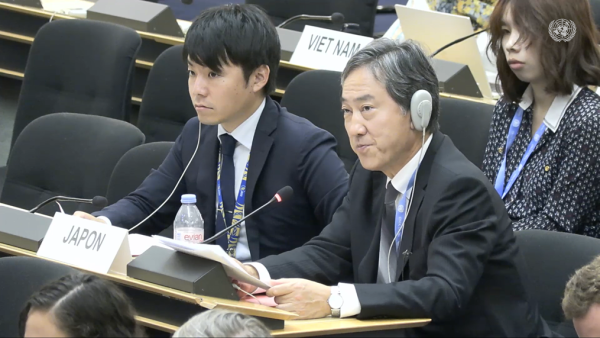
Item 2: Interactive dialogue with the Special Rapporteur on Afghanistan
Statement by Ambassador OIKE Atsuyuki
The Permanent Mission of Japan in Geneva
7 September 2026
Thank you, Mr. Vice-President.
Japan expresses its appreciation to the Special Rapporteur for his continued efforts to improve the human rights situation of the Afghan people.
Japan remains deeply concerned about the human rights situation in Afghanistan, especially the continued institutionalized discrimination against women and girls. As the Special Rapporteur highlighted, five years after the Taliban takeover, women and girls continue to face severe restrictions on education, employment, freedom of movement, and participation in public life.
We are particularly concerned about the long-term impact of these restrictions on the younger generation. According to UN Women, girls continue to be denied education beyond grade six, while growing up with increasingly limited opportunities and prospects for their future. The deterioration of mental health among women and girls is also deeply concerning. These restrictions affect not only women and girls today, but Afghanistan’s future itself.
Japan calls upon the Taliban to respect Afghanistan’s international human rights obligations, remove restrictions on women and girls, and ensure their full and equal enjoyment of human rights. To this end, Japan will leverage its presence in Kabul to directly engage with the Taliban while coordinating with the international community.
I thank you.
Japan expresses its appreciation to the Special Rapporteur for his continued efforts to improve the human rights situation of the Afghan people.
Japan remains deeply concerned about the human rights situation in Afghanistan, especially the continued institutionalized discrimination against women and girls. As the Special Rapporteur highlighted, five years after the Taliban takeover, women and girls continue to face severe restrictions on education, employment, freedom of movement, and participation in public life.
We are particularly concerned about the long-term impact of these restrictions on the younger generation. According to UN Women, girls continue to be denied education beyond grade six, while growing up with increasingly limited opportunities and prospects for their future. The deterioration of mental health among women and girls is also deeply concerning. These restrictions affect not only women and girls today, but Afghanistan’s future itself.
Japan calls upon the Taliban to respect Afghanistan’s international human rights obligations, remove restrictions on women and girls, and ensure their full and equal enjoyment of human rights. To this end, Japan will leverage its presence in Kabul to directly engage with the Taliban while coordinating with the international community.
I thank you.